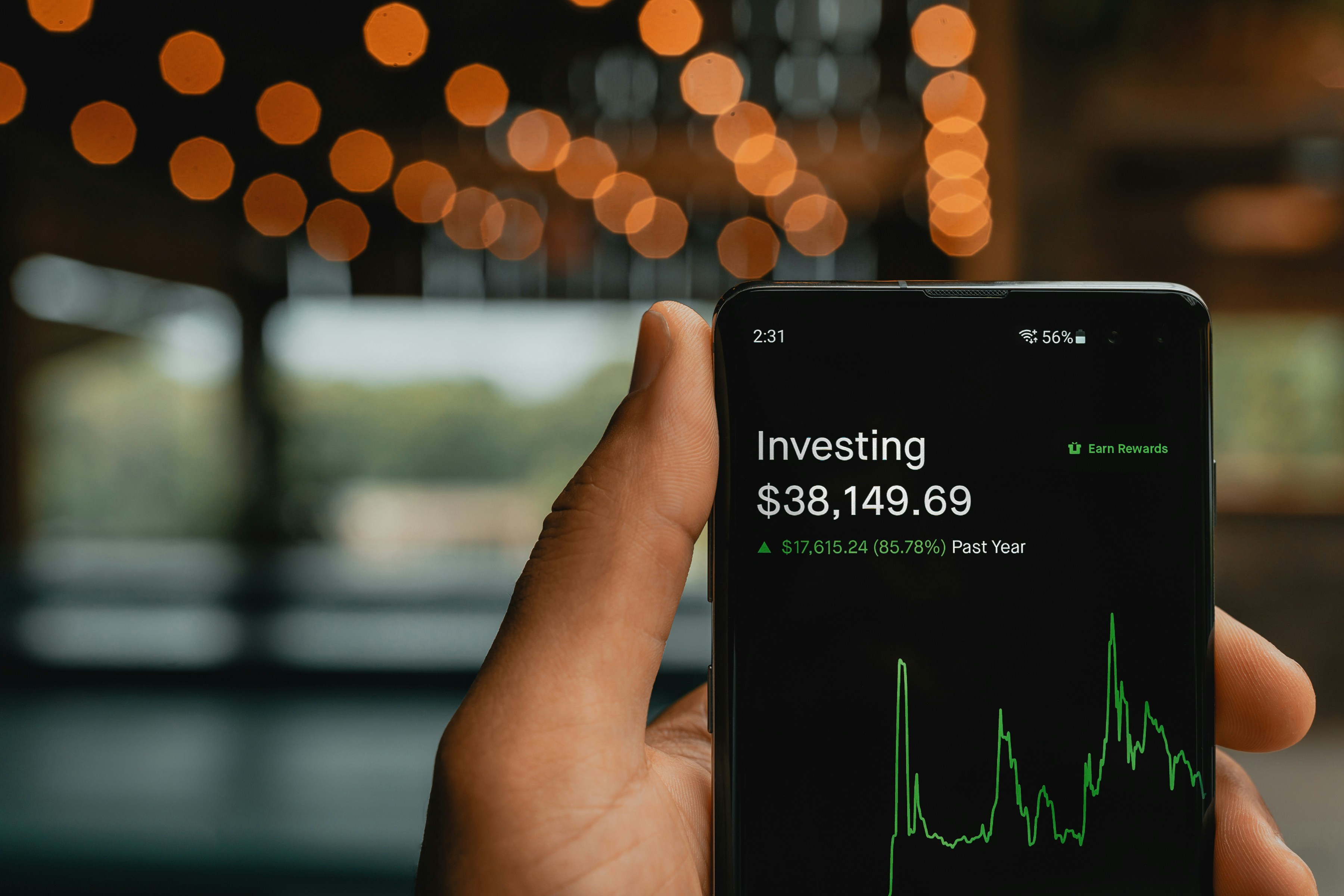
Introduction: From Wall Street to Your Wallet
Investing has always been about making decisions under uncertainty. Whether choosing stocks, bonds, or funds, investors face the challenge of predicting future performance based on imperfect information. Traditionally, this required expertise, intuition, and hours of research. But today, artificial intelligence (AI) is changing the game.
AI-driven investing tools are no longer the exclusive domain of hedge funds and Wall Street elites. Thanks to advances in machine learning, robo-advisors, and algorithmic trading platforms, everyday investors now have access to the same types of predictive models and data-driven insights that once cost millions to develop.
This reflects the broader theme we explored in AI in Personal Budgeting: Smarter Saving, Smarter Spending. Just as AI helps consumers manage their day-to-day finances, it is also reimagining the long-term challenge of growing wealth. Instead of static rules and generic strategies, AI offers adaptive, personalized investment management that evolves with market shifts and individual goals.
In this article, we’ll explore how AI is transforming investing — from robo-advisors to algorithmic trading, risk management, ethical challenges, and the future of AI-powered portfolios.
A Brief History: From Gut Feelings to Algorithms
To understand the revolution AI brings to investing, it helps to see where we’ve come from:
- The age of intuition: For centuries, investing was guided by human judgment, market rumors, and handwritten analysis.
- Quantitative investing: In the 20th century, statistical models and spreadsheets introduced more structured, data-driven decision-making.
- Algorithmic trading: By the 1990s and 2000s, high-frequency trading firms used algorithms to execute thousands of trades per second, exploiting tiny price differences.
- The rise of AI: Machine learning brought a step change. Instead of relying only on static models, AI systems learn from data, adapt to new conditions, and improve over time.
AI represents the culmination of this evolution — moving from reactive analysis to proactive, adaptive decision-making.
How AI in Investing Works
AI investing systems rely on a combination of technologies:
- Data collection: Massive datasets are pulled from financial markets, news, earnings reports, and even social media sentiment.
- Machine learning models: Algorithms detect patterns in historical data, such as signals that predict price movements or portfolio risk.
- Natural language processing (NLP): AI reads and interprets financial reports, press releases, and news headlines faster than humans.
- Reinforcement learning: Some systems “learn” by simulating trading environments, adjusting strategies based on trial and error.
The result is an investing system that doesn’t just follow fixed rules but constantly evolves to adapt to new conditions.
Robo-Advisors: Investing Made Accessible
The most visible AI-driven investment tool for everyday consumers is the robo-advisor.
What Are Robo-Advisors?
Robo-advisors are digital platforms that use algorithms to provide automated investment management. Instead of hiring a human financial advisor, investors answer a few questions about goals and risk tolerance, and the AI builds and manages a diversified portfolio.
Popular Platforms
- Betterment: Among the pioneers of robo-advising, offering goal-based investing and tax optimization.
- Wealthfront: Provides automated portfolio management, financial planning, and AI-driven rebalancing.
- Schwab Intelligent Portfolios: Combines AI-driven portfolios with backing from a traditional brokerage.
- Ellevest: A robo-advisor designed with women’s financial needs in mind, using AI to tailor strategies accordingly.
Benefits
- Low fees compared to human advisors.
- Accessible to beginners with small portfolios.
- Emotion-free investing (no panic selling during downturns).
- Personalized recommendations based on user data.
Robo-advisors have democratized investing, giving millions access to tools that were once reserved for the wealthy.
Algorithmic Trading: Machines on Wall Street
While robo-advisors manage long-term portfolios, algorithmic trading focuses on short-term opportunities.
What Is Algorithmic Trading?
Also known as “algo trading,” it refers to the use of AI and algorithms to execute trades at high speed and frequency. These systems can:
- Detect tiny market inefficiencies.
- Trade in milliseconds before humans can react.
- Manage portfolios across thousands of securities simultaneously.
AI-Powered Hedge Funds
Some hedge funds are fully AI-driven. Examples include:
- Numerai: A hedge fund that uses crowdsourced machine learning models to predict markets.
- Two Sigma: Uses AI and big data to guide billions in investments.
- Renaissance Technologies: Famous for its Medallion Fund, which uses advanced algorithms for market-beating performance.
Benefits and Risks
- Benefit: Speed, efficiency, and ability to analyze enormous datasets.
- Risk: “Flash crashes” caused by runaway algorithms, and overfitting models to past data.
For everyday investors, algorithmic trading may feel distant, but its influence shapes the markets all participants operate in.
Predictive Analytics and Market Forecasting
One of AI’s most powerful applications in investing is predictive analytics.
- Sentiment analysis: AI reads news, tweets, and blogs to gauge market mood. For example, negative headlines about a company may correlate with short-term price drops.
- Earnings prediction: Machine learning models forecast whether a company will beat or miss quarterly earnings.
- Macroeconomic forecasting: AI analyzes interest rates, inflation, and global events to predict market cycles.
Instead of reacting to the news, AI gives investors a forward-looking edge.
AI and Risk Management
Investing isn’t just about returns — it’s also about managing risk.
- Portfolio optimization: AI balances assets across stocks, bonds, and alternatives to match user goals.
- Dynamic rebalancing: Instead of adjusting quarterly, AI can rebalance portfolios daily in response to shifts.
- Downside protection: Algorithms detect early signals of volatility and shift allocations to safer assets.
- Stress testing: AI simulates thousands of “what-if” market scenarios to prepare portfolios for shocks.
These tools help investors navigate uncertainty with more confidence.
AI in Cryptocurrency and Digital Assets
The crypto market is notoriously volatile, and AI tools are stepping in to make sense of the chaos.
- Trading bots: Platforms like 3Commas and Cryptohopper use AI strategies to automate crypto trades.
- Sentiment tracking: AI analyzes Twitter, Reddit, and Discord to anticipate crypto price moves.
- Fraud detection: AI flags suspicious wallet activity and scams in decentralized finance (DeFi).
Crypto investing remains risky, but AI offers tools to bring structure and risk management to the space.
Democratizing Investing: AI for Everyone
AI investing tools are breaking down barriers:
- Low entry costs: Robo-advisors accept accounts with as little as $1.
- Financial literacy: Chatbot advisors explain concepts in plain language.
- Global access: Mobile-first robo-advisors are popular in markets where traditional advisors are scarce.
This democratization mirrors what we saw in AI in Personal Budgeting: Smarter Saving, Smarter Spending — personalization and accessibility at scale.
The Psychology of AI Investing
Investing is as much emotional as logical. Fear and greed drive markets as much as fundamentals. AI mitigates these tendencies:
- Emotion-free trading: Algorithms don’t panic sell or overbuy in euphoria.
- Behavioral nudges: Some robo-advisors encourage long-term thinking and discourage impulsive withdrawals.
- Confidence building: Beginners feel safer with data-driven recommendations than with guesswork.
AI acts as a stabilizing force, reducing the psychological pitfalls that harm investor performance.
Ethical Concerns and Risks
AI in investing also raises serious ethical and systemic questions:
- Transparency: Many algorithms are “black boxes” — investors don’t know how decisions are made.
- Fairness: Are big firms with advanced AI gaining unfair advantages over retail investors?
- Market manipulation: Could AI systems collude (intentionally or not) to move markets?
- Accessibility: Will free or low-cost robo-advisors always remain available, or will profit models shift toward higher-paying clients?
Balancing innovation with fairness will be crucial to ensure AI investing builds trust.
Case Studies: Real-World Impact
- Betterment and Wealthfront: Together manage billions in assets for millions of customers, showing mainstream adoption of robo-advisors.
- AI-driven hedge funds: Firms like Two Sigma have posted strong returns by leveraging machine learning.
- Retail investors: Surveys show users of robo-advisors report higher confidence and satisfaction in their financial futures.
These cases illustrate that AI investing is not a futuristic idea — it’s happening now.
The Future of AI in Investing
Looking ahead, AI promises to push investing into new frontiers:
- Hyper-personalized portfolios: AI systems will integrate life data (career, family, location) to design unique strategies.
- Integration with smart homes and IoT: Imagine your fridge and car contributing data to inform budgeting and investment planning.
- AI-human hybrids: Advisors may use AI for analytics while providing the human empathy and guidance algorithms lack.
- Decentralized AI advisors: Open-source models could allow investors to use community-driven AI rather than corporate black boxes.
The future won’t be man versus machine — it will be man plus machine, combining human judgment with AI insights.
Conclusion: Smarter Investing for a Smarter Future
AI is reshaping the investing landscape from Wall Street to ordinary households. It offers data-driven insights, democratizes access to professional-grade tools, and helps investors avoid the emotional pitfalls that erode returns.
Just as AI in Personal Budgeting: Smarter Saving, Smarter Spending redefined how we manage day-to-day money, AI in investing is redefining how we build long-term wealth. Together, they represent a financial ecosystem that is more personalized, predictive, and accessible than ever before.
The question is no longer whether AI will be part of investing. It already is. The real question is how individuals, institutions, and regulators will shape its role — ensuring that the future of investing is not just smarter, but also fairer and more transparent.
For everyday investors, the message is clear: the age of AI-powered portfolios is here. The smartest move may be to embrace it — not to replace human judgment, but to augment it with intelligence that never sleeps.






Leave a Reply