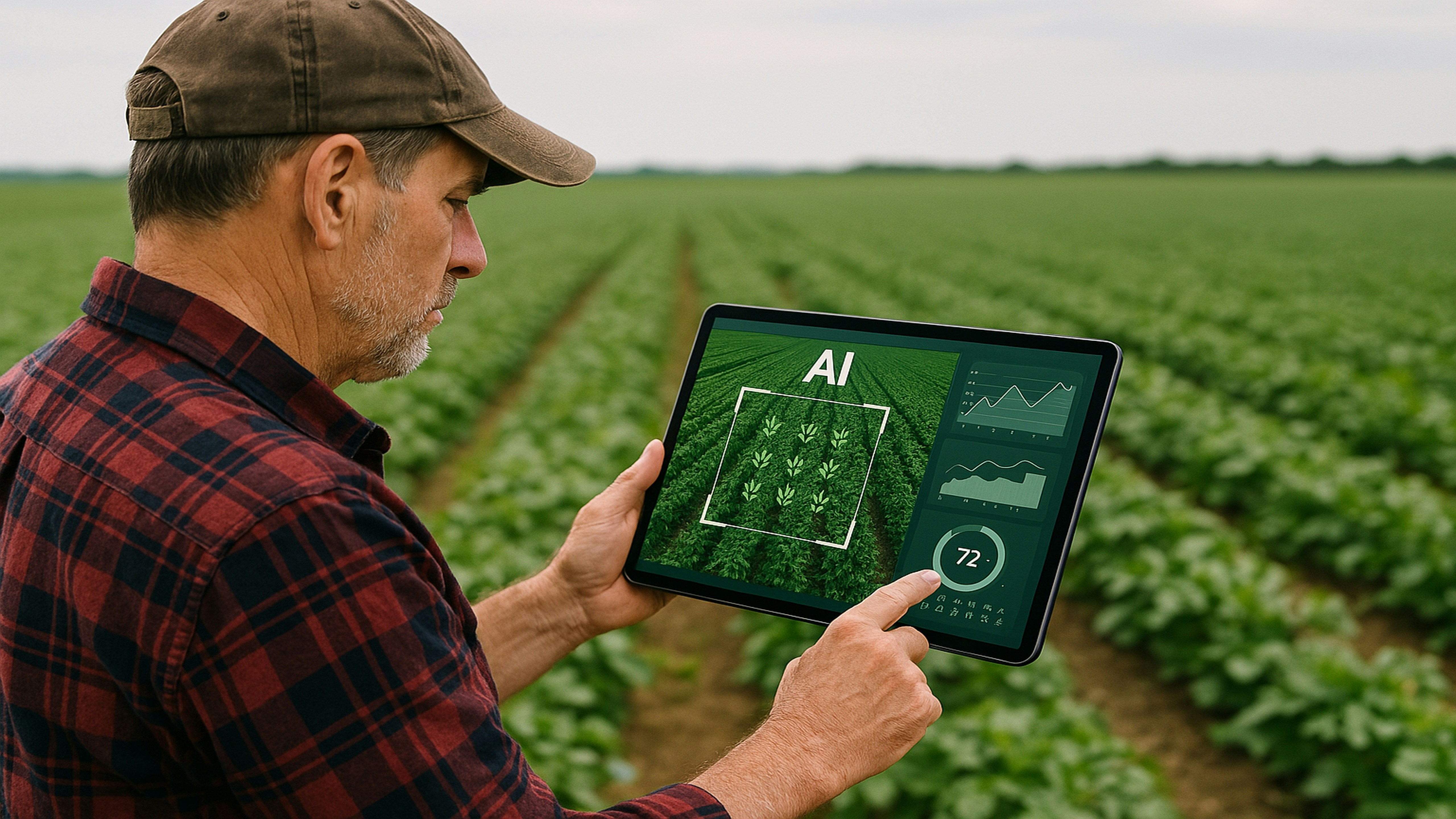
Artificial intelligence has moved far beyond being a buzzword. Once confined to research labs and science fiction, AI is now at the center of business strategy across industries. From marketing automation to supply chain forecasting, companies are finding that AI doesn’t just make operations more efficient — it changes the very way they create value.
As adoption accelerates, business leaders face an important question: where is AI headed next, and how can they prepare? Understanding emerging trends isn’t just about staying current; it’s about staying competitive. Organizations that move early on these developments will be the ones shaping markets, not chasing them.
This article explores the most important AI trends transforming business in the coming years, with practical insights into how leaders can leverage them.
AI Becomes a Core Business Infrastructure
For years, AI was considered an add-on: a tool you might experiment with in marketing, customer service, or data analytics. That’s changing fast. Increasingly, AI is becoming a foundational layer of business infrastructure — as essential as cloud computing or cybersecurity.
Enterprises are weaving AI into the very architecture of their operations. HR systems use AI to screen resumes and predict attrition. Finance departments rely on AI-driven risk models. Manufacturing plants deploy predictive maintenance powered by machine learning.
The shift is clear: AI is no longer a project; it’s a utility. Just as businesses today couldn’t operate without internet connectivity, in a few years they won’t be able to function competitively without integrated AI.
Hyper-Personalization in Customer Experience
One of the most powerful applications of AI is in personalization. Customers increasingly expect experiences tailored to their preferences, and AI makes this possible at scale.
Retailers are moving beyond generic “you may also like” recommendations. Instead, AI can factor in browsing history, purchase behavior, social signals, and even contextual data like weather or location. Imagine receiving an offer for sports gear right before your local marathon, or a travel promotion that aligns perfectly with your browsing patterns.
This isn’t limited to e-commerce. B2B companies are using AI to personalize proposals, training content, and product demos. Banks are offering personalized financial advice through AI-powered apps. Healthcare providers are tailoring care plans based on AI-driven patient data.
Hyper-personalization doesn’t just increase conversion rates — it deepens trust and loyalty by making customers feel truly understood.
Generative AI Moves Beyond Content
Generative AI has captured the world’s attention with tools that create text, images, and even code. Businesses are already using these systems to write marketing copy, generate graphics, and prototype software. But the future of generative AI lies in how it integrates with operations beyond content creation.
In product design, generative AI can propose entirely new concepts based on customer feedback and market gaps. In law, it can draft contracts and analyze precedents. In medicine, it may one day generate personalized treatment plans based on a patient’s unique profile.
The key trend to watch is how generative AI evolves from being a creative assistant to being a strategic co-pilot, helping leaders make better, faster decisions.
AI-Powered Automation in the Workforce
Automation isn’t new, but AI is expanding what’s possible. Traditional automation follows rules; AI-powered automation adapts and learns. This means businesses can automate tasks that were once considered too complex.
Customer support is a prime example. Chatbots have been around for years, but new AI agents can handle nuanced queries, escalate intelligently, and even detect customer sentiment. In finance, AI automates fraud detection by spotting subtle anomalies that rules-based systems miss. In supply chains, AI optimizes routing and logistics in real time.
The conversation around automation also raises important workforce questions. While AI will eliminate certain roles, it’s also creating new ones — AI trainers, ethicists, explainability specialists. Companies that invest in reskilling and employee transition strategies will navigate this shift more smoothly than those that treat AI purely as a cost-cutting tool.
Predictive Analytics Becomes Proactive Intelligence
Predictive analytics has been a cornerstone of AI in business, but the future lies in moving from prediction to proactive intelligence. Instead of simply forecasting outcomes, AI systems will begin recommending — and even executing — next best actions.
For instance, instead of just predicting that a customer is likely to churn, AI could trigger a retention campaign automatically. Instead of forecasting equipment failure, AI could schedule maintenance before a problem occurs.
This proactive approach turns AI into a silent business partner, working behind the scenes to optimize performance without constant human oversight.
Ethical AI and Responsible Governance
As AI becomes more deeply embedded in business, questions of ethics and governance are unavoidable. Customers and regulators are increasingly scrutinizing how organizations use data and algorithms. Transparency, fairness, and accountability are no longer optional.
Businesses will need robust frameworks for ethical AI. This includes bias detection in algorithms, explainability in decision-making, and compliance with evolving regulations like the EU AI Act.
Forward-thinking companies are already creating internal AI ethics boards, publishing transparency reports, and giving customers more control over their data. Those that get governance right won’t just avoid reputational damage — they’ll gain a competitive advantage by building trust.
Industry-Specific AI Transformations
The impact of AI isn’t uniform. Each industry is developing unique applications that will reshape competitive dynamics.
- Healthcare: AI is driving precision medicine, diagnostics, and even drug discovery. Startups are using AI to analyze genetic data, while hospitals deploy it to optimize resource allocation.
- Finance: Fraud detection, robo-advisors, and real-time risk analysis are becoming the norm. AI also plays a growing role in regulatory compliance.
- Retail: From inventory management to AI-powered fashion design, retailers are reinventing how they serve customers both online and offline.
- Manufacturing: Predictive maintenance, robotics, and supply chain optimization are transforming production efficiency.
- Energy: AI is helping utilities predict demand, manage grids, and accelerate renewable integration.
For business leaders, the key is understanding not just general AI trends, but how they manifest specifically in their industry.
Human and Machine Collaboration
One of the most significant future trends is how humans and AI will collaborate. The narrative of AI “replacing” humans is giving way to one of augmentation. The most successful organizations will be those that combine human creativity, judgment, and empathy with machine precision and scalability.
Consider legal professionals using AI to draft contracts but applying their expertise to negotiate nuances. Or marketers using AI to generate campaign ideas while they focus on storytelling and brand alignment.
This collaborative model is less about substitution and more about amplification — humans doing what they do best, supported by AI doing what it does best.
AI and the Global Workforce
AI won’t just reshape tasks; it will reshape the global workforce itself. Remote collaboration tools powered by AI are making it easier to manage distributed teams. Language models are reducing barriers in international communication. Virtual AI assistants may soon handle cross-border compliance and documentation.
The result is a more fluid global labor market, where talent can contribute across geographies with fewer friction points. For businesses, this expands access to skills but also raises questions about labor laws, taxation, and cultural integration.
The Role of AI in Strategic Decision-Making
Perhaps the most profound shift is how AI is entering the boardroom. Senior leaders are starting to use AI-driven dashboards that synthesize market data, competitor intelligence, and internal performance metrics into clear recommendations.
Imagine a CEO receiving not just a financial report, but an AI-powered scenario analysis showing the potential impact of different strategic moves. This doesn’t replace human judgment but enhances it with insights too complex for individuals to calculate quickly.
As AI becomes a co-pilot in executive decision-making, the speed and accuracy of business strategy will change dramatically.
Preparing for the Future of AI in Business
The organizations that thrive in the AI-driven future will be those that act today. Preparation doesn’t mean adopting every shiny tool; it means building a culture of experimentation, investing in data infrastructure, and prioritizing responsible governance.
Key steps include:
- Assessing your current AI maturity and identifying gaps
- Building cross-functional teams that combine technical and business expertise
- Starting small with pilots but scaling quickly when results are proven
- Reskilling employees so they can thrive in augmented roles
- Engaging with customers transparently about how AI is used
The pace of AI development means waiting is not an option. Businesses that hesitate risk being outpaced by more agile competitors.
Conclusion: AI as the Next Business Revolution
AI is not a passing trend. It is a structural shift in how businesses operate, compete, and grow. From hyper-personalized customer experiences to AI-driven strategic decision-making, the future of business will be defined by how effectively organizations integrate intelligent systems.
The companies that view AI as a partner, not just a tool, will lead industries into the next era. The ones that wait on the sidelines may find themselves struggling to catch up.
The future of AI in business is already unfolding. The question is no longer whether AI will reshape your industry — it’s how prepared you are to take advantage of it.
Related Reading
If you’re exploring how artificial intelligence is reshaping industries, check out our guide on AI in Email Marketing: Smarter Campaigns That Convert and our detailed overview of AI SEO tools that boost your search rankings. Together, these resources give you a complete perspective on how AI is driving the next wave of digital transformation.





Leave a Reply