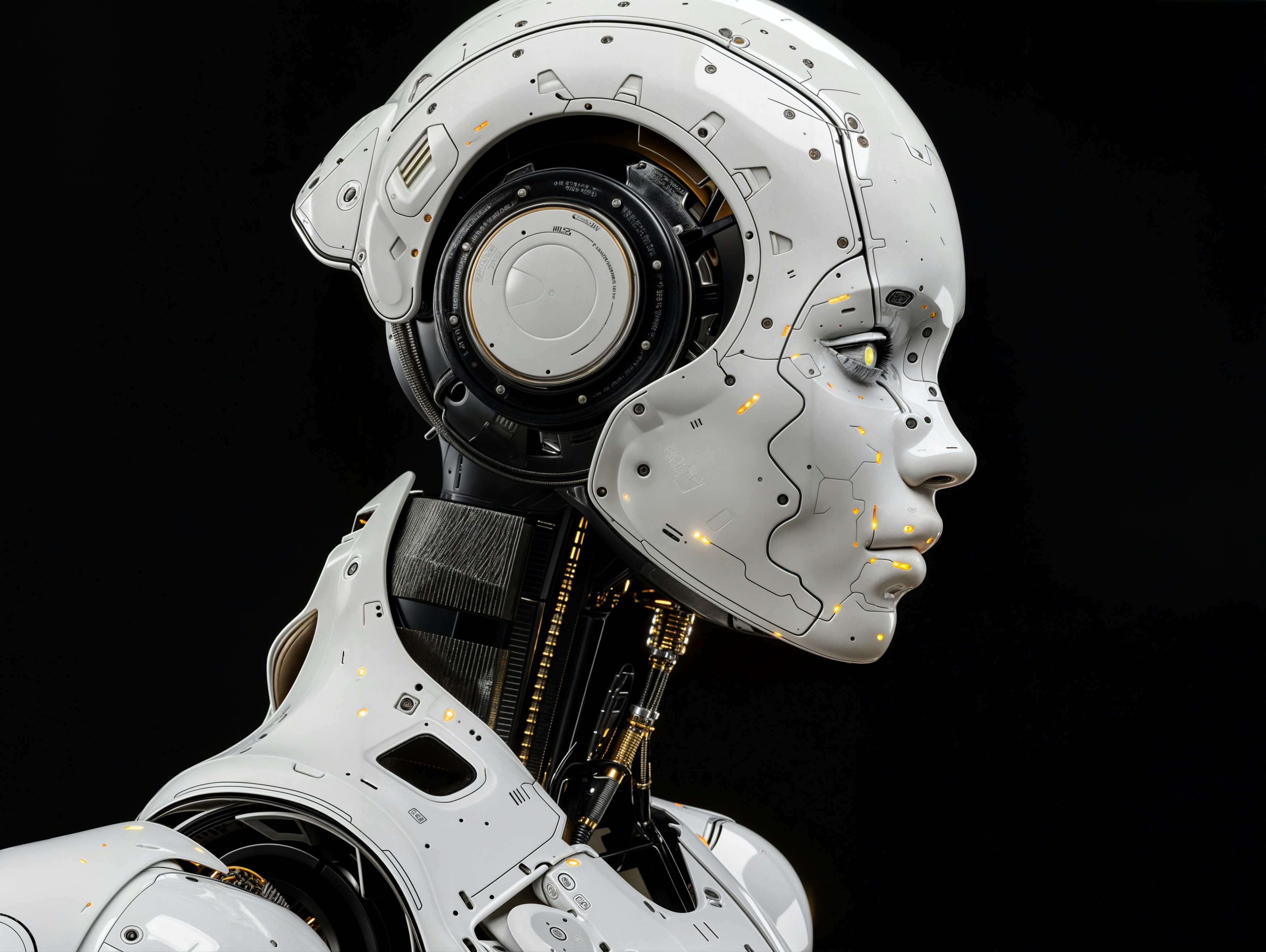
Artificial intelligence is no longer a futuristic idea confined to science fiction. It is already here, shaping industries, economies, and everyday life in ways that would have been unthinkable a generation ago. Over the next decade, AI will not simply advance incrementally; it will become the foundation upon which societies are built. The coming years promise breakthroughs in science, medicine, energy, education, governance, and culture, but they also carry risks of inequality, misinformation, and power concentration.
The central question is not whether AI will transform the world, but how. What values will guide its deployment? Who will benefit? And how can societies ensure that AI’s extraordinary capabilities are aligned with human well-being rather than exploitation?
Just as governments are beginning to integrate AI into policy frameworks, as discussed in AI and Government: Smarter Policy, Better Governance, and as international rivalries and alliances define the global landscape of AI development, as outlined in The Global AI Race: Cooperation or Competition?, the next decade will require choices that shape whether AI becomes a tool for collective progress or division.
AI as the New Infrastructure
By 2035, AI will no longer be treated as an optional technology layered onto existing systems. It will be foundational infrastructure, as essential as electricity or the internet. Governments, businesses, and individuals will rely on AI-driven platforms for decision-making, resource allocation, communication, and creativity.
In cities, AI will regulate traffic flows, energy grids, and public safety. In agriculture, it will optimize food production to adapt to shifting climates. In healthcare, predictive diagnostics and personalized treatments will become standard. Even the workplace itself will be redefined as AI assistants manage workflows, freeing humans for higher-level problem-solving.
This integration will blur the boundaries between digital and physical environments. Smart infrastructure will enable seamless interaction between citizens and services, raising questions about privacy, autonomy, and control. Trust in AI infrastructure will become as important as trust in political institutions or financial systems.
The Evolution of Work and the Economy
The next decade will witness profound changes in the nature of work. Automation will expand into areas once thought safe from machine intervention—law, design, education, and even scientific research. The distinction between “AI-friendly” and “AI-vulnerable” jobs will fade as every profession incorporates machine intelligence in some form.
For workers, this transformation is double-edged. On one hand, AI promises to eliminate repetitive tasks, improve efficiency, and augment human skills. On the other, it risks displacing entire categories of employment, with uncertain pathways for reskilling and adaptation. Economic inequality could deepen if societies fail to provide equitable access to AI opportunities.
Global productivity is expected to soar, with estimates of trillions added to the world economy. But the distribution of those gains remains uncertain. Nations that lead in AI development will consolidate power, while others risk dependency. This mirrors the dynamics already evident in global geopolitics, where AI leadership is seen as a marker of national strength.
The Democratization of Creativity
One of the most striking possibilities for the next decade lies in creativity. AI is already generating art, music, and literature, challenging traditional notions of originality. Over time, these systems will become not just imitators but collaborators, working alongside human creators in an ongoing dialogue between imagination and computation.
Entire industries may be reshaped. Marketing campaigns will be developed by AI teams in seconds. Films and video games will incorporate AI-generated characters and environments that evolve dynamically based on audience interaction. Writers, artists, and musicians will shift from solitary creation to curation and orchestration of machine outputs.
This democratization of creativity opens opportunities for broader participation but also raises ethical and cultural questions. Who owns AI-generated content? How do we preserve human authenticity in a flood of algorithmic production? These questions will shape the cultural politics of the 2030s as much as the technologies themselves.
AI in Science and Discovery
AI will accelerate scientific progress by functioning as a tool of discovery. Already, AI has contributed to breakthroughs in protein folding, drug discovery, and materials science. Over the next decade, these capabilities will expand exponentially.
In climate science, AI will provide increasingly accurate models of environmental change, enabling better planning and mitigation strategies. In physics, it may help uncover patterns in vast experimental datasets, leading to discoveries beyond current human comprehension. In medicine, AI will be integral to genomic analysis, enabling personalized treatments tailored to an individual’s unique biological makeup.
This acceleration of discovery could herald a golden age of science, compressing centuries of progress into decades. But it will also raise ethical questions about access, ownership, and control of knowledge. Who decides which discoveries are shared openly and which are commercialized?
Governance, Ethics, and Regulation
The future of AI will depend as much on governance as on technology. Without effective oversight, the risks of misuse are profound. Surveillance states, autonomous weapons, and algorithmic bias are not hypothetical threats; they are realities already emerging.
Over the next decade, governments will be forced to balance innovation with regulation. International treaties may establish norms for military AI, data privacy, and ethical deployment. Domestic regulations will need to ensure transparency, accountability, and fairness in AI applications that affect citizens’ lives.
Public trust will be the most valuable currency. Citizens will not embrace AI in healthcare, education, or governance unless they believe it serves their interests. Achieving that trust will require openness, participation, and ongoing dialogue between governments, technologists, and the public.
AI and Global Power
The geopolitical dimension of AI will intensify. Nations will compete for dominance in AI infrastructure, talent, and intellectual property, seeing it as a cornerstone of future power. At the same time, the need for cooperation will grow, especially in addressing global challenges such as climate change, pandemics, and financial stability.
The danger lies in treating AI purely as a weapon of rivalry. As explored in The Global AI Race: Cooperation or Competition?, fragmentation into competing blocs could undermine progress on shared challenges. The alternative is to foster cooperative frameworks that allow nations to benefit from innovation while establishing safeguards against misuse.
The balance between competition and cooperation will define not only the future of AI but the future of international order. If handled wisely, AI could become a foundation for global collaboration. If not, it risks fueling division, mistrust, and conflict.
Human Identity and the Meaning of Intelligence
Perhaps the most profound impact of the next decade of AI will be cultural and philosophical. As machines generate art, compose music, write essays, and engage in conversation, society will be forced to confront fundamental questions about intelligence and identity.
What does it mean to be human in a world where machines can replicate aspects of creativity, reasoning, and emotion? Will we redefine intelligence as something broader than computation, emphasizing values such as empathy, ethics, and context? Or will AI blur the lines so thoroughly that distinctions between human and machine intelligence become irrelevant?
These questions will shape education, culture, and even religion in the coming decades. The answers will not be technological but deeply human, reflecting the ways societies choose to adapt and evolve.
Conclusion: Choosing the Future
The next decade of AI is not preordained. It will be shaped by choices — choices about governance, investment, ethics, and culture. The technology itself is neutral; its outcomes depend on the frameworks we build around it.
AI has the potential to usher in a new era of prosperity, creativity, and discovery. But it could also entrench inequality, undermine trust, and destabilize societies if left unchecked. The difference will lie in whether humanity approaches AI with wisdom, foresight, and a commitment to shared progress.
As highlighted in both AI and Government: Smarter Policy, Better Governance and The Global AI Race: Cooperation or Competition?, the path forward requires more than innovation. It requires responsibility. AI is not just about efficiency or power; it is about values, meaning, and the kind of future humanity wishes to create.
The coming decade will be decisive. In the choices societies make, we will discover whether AI becomes a tool for collective flourishing or a source of division. What is certain is that AI will shape the world as profoundly as any technology in history. The question is whether we will shape it wisely.




Leave a Reply